
The Illusion of Control in Keno
Keno, at its core, is a game of pure chance. Players select a set of numbers, and then a random drawing determines the winning combinations. This fundamental randomness often leads players to seek out patterns or systems, a psychological phenomenon known as the illusion of control. Despite the mathematical certainty that each draw is independent, many gamblers believe they can influence outcomes through number selection strategies or by tracking past results. This pursuit of a perceived advantage, even in a game devoid of skill-based input, highlights a deep-seated human desire to impose order on chaos, and platforms like tropicanza gb casino offer a modern way to engage with such games.
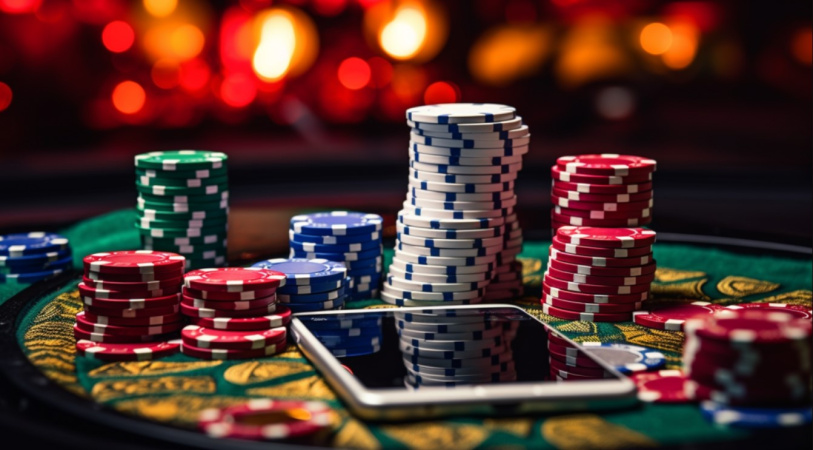
This quest for control is a philosophical underpinning of gambling itself. It speaks to our inherent need to feel agency, to believe that our actions have a meaningful impact on the world around us. In keno, this manifests as the careful selection of numbers, the hope that a particular sequence or combination might be “due” or “lucky.” The philosophical power lies not in the game’s mechanics, but in how it taps into our fundamental psychological drives to understand, predict, and ultimately, master our environment, even when that environment is purely probabilistic.
Keno and the Nature of Fate
The game of keno also delves into the philosophical concept of fate. Each number drawn can be seen as a small twist of destiny, a predetermined outcome that the player can only react to. This perspective can be both liberating and terrifying. On one hand, it removes the burden of responsibility for loss; on the other, it can lead to a sense of helplessness when luck does not favor the player. The keno draw becomes a microcosm of life’s unpredictability, where external forces dictate outcomes beyond individual influence.
Philosophically, this resonates with deterministic viewpoints where events are predetermined. In keno, the draw is the ultimate arbiter, and the player’s choices are merely precursors to an inevitable result. The enjoyment derived from the gamble often stems from the anticipation of this fated outcome, the brief period of hope before the numbers are revealed. It’s a tangible, albeit artificial, engagement with the concept of what is meant to be.
The Ethics of Chance and Reward
The ethical dimensions of gambling, including keno, are also worth exploring. The distribution of winnings and losses in a game of pure chance raises questions about fairness and societal impact. Is it ethical to profit from the misfortunes of others, even in a voluntary activity? The philosophical debate here centers on the balance between individual liberty to engage in such activities and the potential for harm, both to individuals and to society. Keno, with its low barrier to entry and simple mechanics, often becomes a focal point in these discussions.
The underlying reward system in keno also touches upon philosophical ideas about motivation and value. The potential for a large payout, however improbable, drives engagement. This speaks to our perception of value, where the possibility of extreme reward can outweigh the likelihood of consistent loss. This gamble on possibility is a powerful philosophical driver, influencing not just betting habits but also broader life decisions where calculated risks are taken for potentially significant gains.
The Existential Gamble of Keno
Beyond control and fate, keno offers a unique form of existential engagement. In a world that often demands predictability and structure, the pure randomness of keno can be a stark reminder of life’s inherent uncertainties. The act of placing a bet, selecting numbers, and awaiting the draw is a small-scale enactment of confronting the unknown. It’s an engagement with chance that, for some, strips away the artifice of everyday life and confronts them with a fundamental truth: that many outcomes are beyond our direct command.
This existential element is amplified by the social aspect of keno in many settings. Sharing the experience of the gamble, the collective anticipation and shared outcomes, can foster a sense of camaraderie. This communal confrontation with chance, where individuals unite in their hope for favorable outcomes, highlights a shared human experience of navigating uncertainty. The philosophical power of keno here lies in its ability to bring people together in a shared, albeit fleeting, dance with destiny.
Tropicanza GB: Navigating the Landscape of Chance
Within the context of online gambling, platforms like Tropicanza GB offer a modern avenue for engaging with games like keno. While the philosophical underpinnings remain the same – the illusion of control, the concept of fate, the ethics of reward – the digital interface transforms the player’s experience. Tropicanza GB aims to provide a secure and engaging environment where these games can be accessed, offering players the opportunity to engage with chance in a regulated space. Understanding the philosophical depth behind each bet can enrich the player’s appreciation for the game, regardless of the outcome.
The mission of entities like Tropicanza GB often involves providing entertainment while adhering to responsible gambling practices. This dual focus acknowledges the inherent nature of gambling as a pursuit of chance, while also emphasizing the importance of player well-being. By offering a variety of games, including those rooted in pure probability like keno, they cater to a spectrum of player preferences, all while operating within a framework designed to manage the associated risks. Their role is to facilitate the exploration of chance, allowing individuals to engage with these philosophical concepts in a controlled digital setting.